


Italy is synonymous with pasta, and it is not only a matter of taste but also of numbers. We rank first in the world in terms of pasta production (3.7 million tons), with an average per capita consumption of close to 23 kg per year. However, behind the appeal of each dish is a complex web of operations that pasta makers must manage every day. This is whereERP-Enterprise Resource Planning comes in, which can make all the difference in the lives of Italian pasta producers. Let’s see together how it works and why it is a resource every pasta maker should consider!
ERP for Pasta Factories: what it is and how it works
Imagine an orchestra conductor coordinating each section of a symphony: ERP does the same with the different departments of a company.
This is management software that integrates the various business processes-such as administration, logistics, production, and sales-into a single system.
For pasta factories, an ERP allows them to control all stages of production: from the procurement of raw materials (quality durum wheat, for example), to distribution to the market. Result? Less waste, greater efficiency, and consistent quality.
What is the situation of Italian pasta factories
Italian pasta is appreciated all over the world, and Campania, Emilia-Romagna, Sicily and Puglia are some of the regions that stand out for their productions.
However, Italian pasta makers face unique challenges, especially in terms of quality control and inventory management. According to a survey by Mediobanca, dry pasta accounts for 95 percent of total production, while fresh pasta is mainly concentrated in northern Italy, reflecting differences in consumption preferences.
The costs of raw materials, especially durum wheat, can fluctuate greatly. And because our country is not self-sufficient in durum wheat production, we also depend on imports, especially from Canada, France and Greece.
Source: Mediobanca Research Area
With a tailored ERP, pasta factories can optimize inventory management and anticipate needs, avoiding unexpected price increases and reducing waste.
Why is an ERP the ideal solution for the pasta industry?
- Inventory Management and Waste Reduction: an ERP for pasta factories allows you to constantly monitor inventory and reduce waste. There are no more surprises when it comes time to reorder, and quality control becomes easier.
- Improved Traceability: from the processing stage to distribution, an ERP keeps track of every batch. This is crucial to ensure consistent product quality and to meet food safety requirements.
- Process Automation: automating business processes means freeing staff from repetitive tasks, improving overall efficiency.
FOOD365: the perfect management ERP for the pasta factory
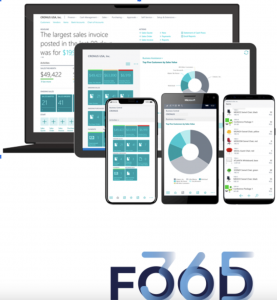
FOOD365, based on Microsoft Dynamics 365 Business Central, is a flexible management solution developed to meet the specific needs of the agribusiness sector. Specifically designed for pasta factories, this platform offers comprehensive management of business processes (administrative, commercial, logistics and production), with functionality covering every aspect of the business, without lengthy start-up procedures.
- Go to the dedicated page to find out what you can do with FOOD365
FOOD365 also enables:
- Manage production in real time: view order and stock status at all times, avoiding delays and ensuring punctuality.
- Quality Control of Raw Materials and Finished Products: with definition of the type of control and input of parameters to obtain a data sheet of the controls performed.
- More data and evaluation indexes on production: to analyze line yields, actual processing cost, downtime statistics, nonconformity statistics.
- Increased definition of cost as the sum of direct and indirect costs: with specification in the same BOM of both production components and items that represent expense items that are not “seen” by production.
- Pricing flexibility by customer, group, sales channel, buying group, area or territory: and also defining packaging specifications according to customer/clients.
- Optimize logistics: ready-to-ship pasta will be in the right place at the right time, avoiding downtime in the warehouse and improving product freshness.
- Traceability and Batch Traceability of finished products and raw materials: allows monitoring and recording every stage of the production cycle. It enables tracking of raw materials and finished products, ensuring safety and transparency, and facilitating rapid intervention if necessary.
- Customization: the flexibility of the platform allows the functionality to be tailored to the specific needs of the company and individual agribusiness.
- Easy to use: with intuitive graphics, it allows all staff to work on systems quickly and easily, without requiring long start-up periods.
FOOD365 is compatible with any MES system
It can integrate with any MES system, including customized ones, to manage data sorting and essential information related to individual orders and specific configured production lines. It also enables automatic updating of finished product inventories.
Velika accompanies you in digitizing your business
Implementing a pasta factory ERP, such as FOOD365, is a significant advantage in optimizing processes, reducing waste and improving overall quality. With the help of state-of-the-art technology, theItalian pasta industry can continue to bring the taste of our tradition to tables around the world – even more efficiently and sustainably.
At Velika, we see Food365 not only as a solution, but as an opportunity. Thanks to our experience and dedication, each project becomes an opportunity to grow together with our clients, who are true partners for us. Our goal is not just to provide software, but to be by their side every day, offering timely answers and tailored strategies to overcome every challenge. Because for us, our customers’ success is our success.
Share